Welcome back to the First-Time Buyer Series. Last time we talked about figuring out how much house you can actually afford. This time we're tackling the part of the process that trips up almost

Dated: February 18 2021
Views: 22
Recalling a news story that the retail department store chain was planning to close dozens of stores, I ask, “Everything is half-off – is this one of the stores that is closing?” Jenny looks down and responds, “No, this store is not closing.”I reply, “That’s good, so many folks are already out of work.” Jenny looks up; her gaze seems to look past me. I guess that Jenny is in her early 60s. She laments, “Today is my last day. You know, I have worked here for years.”
Before I can express my sympathy, she volunteers “I don’t know what I am going to do, my husband can’t work, and I am not sure who is going to hire me now. People think that people like me should just retire...but I am not sure I can afford that. My daughter says I can’t just sit at home. I will go nuts just looking after my husband.”
Jenny and other women near her age do not fit neatly into popularized generational buckets and life stages. They don’t fit marketing images of Gen X moms managing young teens at home, instead they are likely to be the oldest Gen X women, now empty nesters, and see their late 50s and future retirement in sight. And, they include the youngest Baby Boomer women already in their late 50s and early 60s. Unlike ubiquitous stereotypical images found on retirement brochures of older Baby Boomers strolling beaches and rolling down bike paths, these women are part of an aptly named, seemingly anonymous, Generation Jones that is still very much working and wanting to work
These women do not fit neatly into one generation or another but they are caught in between the demands of younger and older generations. They are likely to be the primary caregiver to a partner or spouse — and almost always — the person relied upon by elderly parents and in-laws. Younger Millennial and Generation Z adult children call these women mother, grandmother, and rely on their advice, care, and often their financial support.
After years of raising children, many of these women reentered the job market. Before the pandemic the share of women over 55 years old in the workforce outpaced all other age groups. Going back to work is more than a strategy to make up for lost earnings while raising children or to shore up retirement savings, it is about something more. As Jenny recounts her daughter’s remarks, “[you] can’t just sit home.” While all women face challenges in job market, women Jenny’s age are caught in between the double-whammy of ageism and sexism. Research suggests that women in their later 50s and early 60s are not only victims of sexism and ageism, they are also less likely than men to benefit from laws designed to protect against ageism.
If getting back to work was not difficult enough, women are disproportionately employed in industry sectors under assault by the pandemic and ongoing structural change — hospitality and leisure, food services, administrative support, and retail. Major retailers, for example, were downsizing, or closing, long before COVID-19. The decline of the mall and the rise of online shopping are just two factors contributing to the retail industry’s ongoing restructuring and Jenny’s own job loss. As retail finds a new equilibrium between big box, little box, bricks, and clicks, the loss of jobs in traditional retail has hit women (nearly 60% of the retail workforce) like her the hardest.
Women caught in between find themselves navigating an uncertain future — a future that is likely to be living for another 25-30+ years. They are more than pre-retirees, they are fulcrums of multiple generations. They are spouses and partners. They are mentors and sources of support to adult children and grandchildren. They are caregivers to elderly loved ones. They are vital sources of household income. They are drivers of economic productivity. They are key influencers and consumers. Yet, they are seemingly invisible, even forgotten by some. The needs of women caught in between deserve attention and positive action from industry, government, and families today. Recognizing their contributions, and supporting them, supports us all.
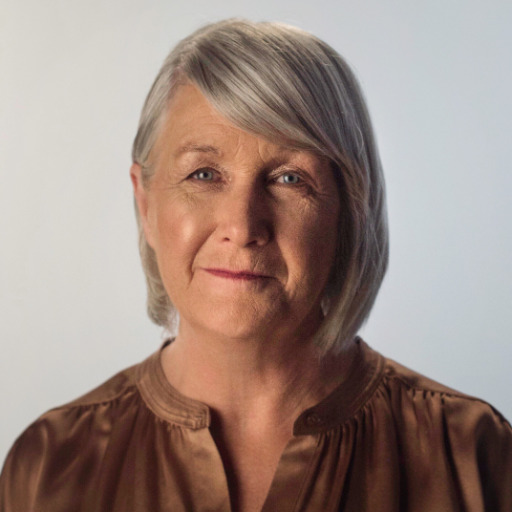
Born In England, raised in Australia and 'imported' to the USA by a career military husband, my life brings a well travelled perspective and know how when it comes to finding a place to call home.Foll....
Welcome back to the First-Time Buyer Series. Last time we talked about figuring out how much house you can actually afford. This time we're tackling the part of the process that trips up almost
Foodie Finds Near My Latest Listings: A PNW Farmers Market TourOne of my favorite parts of showing homes around the Puget Sound is that I never just learn the listing, I learn the neighborhood. And
Neighborhood Spotlight: Everett's Waterfront RevivalFor most of its recent history, Everett's waterfront has been a working waterfront first and a destination second — marina, seaport,.
First-Time Buyer Series Pt. 1: How Much House Can You Actually Afford?This is the question I get asked more than almost anything else, and it's usually followed by some version of "I have no idea
 Claims of Copyright Infringement & Related Issues
Disclaimer:
IDX information is provided exclusively for consumers' personal noncommercial use,
that it may not be used for any purpose other than to identify prospective properties
consumers may be interested in purchasing, that the data is deemed reliable but is not
guaranteed by MLS GRID, and that the use of the MLS GRID Data may be subject to an end user
license agreement prescribed by the Member Participant's applicable MLS if any and as amended
from time to time.
The information contained in this listing has not been verified by Weichert, Realtors® - Pillar Northwest and
should be verified by the buyer.
The database information herein is provided from and copyrighted by the
Northwest Multiple Listing Service (NWMLS). NWMLS data may not be reproduced or
redistributed and is only for people viewing this site. Listings that feature the
"three tree" icon are provided courtesy of NWMLS. All information provided is deemed
reliable but is not guaranteed and should be independently verified. All properties
are subject to prior sale or withdrawal. All rights are reserved by copyright.
Based on information submitted to the MLS GRID as of September 12, 2026 8:53 PM UTC. All data is obtained
from various sources and may not have been verified by broker or MLS GRID.
Supplied Open House Information is subject to change without notice.
All information should be independently reviewed and verified for accuracy.
Properties may or may not be listed by the office/agent presenting the information.
Some IDX listings have been excluded from this website.
Copyright 2026 Northwest Multiple Listing Service. All rights reserved.
